Utility Billing
Nebraska Solar Buyback: Why Monthly Surplus Uses a Different Value
Matching annual solar production to annual household use does not show how much monthly surplus receives avoided-cost compensation.
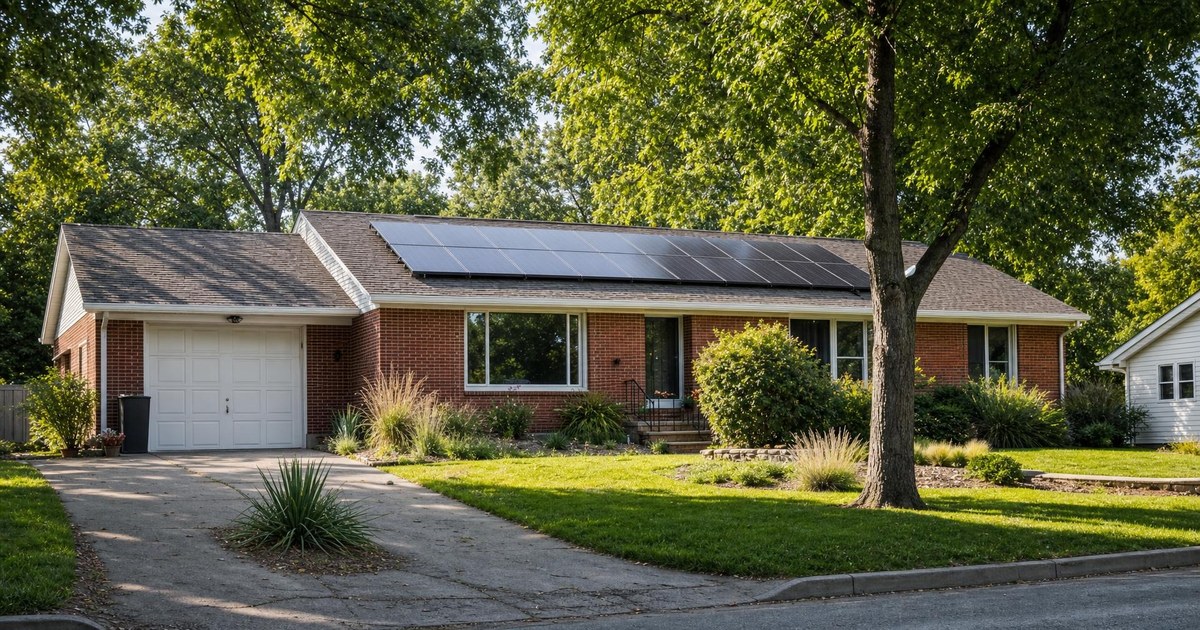
A Nebraska solar proposal can show annual production matching annual household use and still overstate the value of the electricity. The missing detail may be the billing period. Under Nebraska's net-metering framework, the value changes when production exceeds the customer's electricity requirements for that period.
That distinction matters when a homeowner receives both a solar payment and an electric bill despite an optimistic annual offset figure. Review the monthly calculation before concluding that the system must be underproducing.
Separate retail offsets from surplus credits
Nebraska Revised Statute 70-2002 defines net metering to credit qualifying production at the applicable retail rate up to the customer's electricity requirements during the billing period. Net excess receives the local utility's avoided cost of electricity supply. The statute defines a qualified facility as no larger than 25 kilowatts and includes other eligibility conditions.
Under section 70-2003, excess monetary credits carry forward against later bills. Remaining money is paid with the final bill of the annualized period, or within 60 days after retail service terminates. That is a monetary balance, not a promise that each surplus kilowatt-hour remains available to offset a later kilowatt-hour at retail.
Annual matching can conceal a monthly mismatch
Imagine a hypothetical household with strong production in several months and much greater electricity needs in others. A yearly total can make the two sides look balanced. The monthly bills may nevertheless include surplus converted at avoided cost and electricity purchases in other periods.
Ask for a month-by-month forecast with separate columns for production, household use, net surplus and the dollar value of that surplus. The seller should identify the local utility, rate schedule and effective date behind the price assumptions. A state average electricity price is not enough to reproduce a particular bill.

The distinction is especially useful when evaluating a larger proposed system. Ask what portion of its additional output is expected to offset usage within the billing periods and what portion becomes surplus. The financial benefit of the extra panels should be shown separately from the benefit of the original system.
Your local utility supplies the price
Nebraska's statute does not create one statewide cents-per-kilowatt-hour buyback figure. NPPD's official net-metering guidance, for example, distinguishes generation types and summer and winter compensation. That guidance illustrates why the actual utility schedule belongs in the calculation; it is not a price list for every Nebraska household.
Use the provider named on your bill, whether it is a public power district, municipal utility or other local distribution utility. Do not assume an NPPD schedule applies merely because the property is in Nebraska. Likewise, a larger or separately negotiated generation arrangement needs its own review rather than an automatic application of the small-system framework.
Rebuild the savings comparison from records
Gather a complete year's bills, the interconnection agreement and the original proposal. Identify each period with net excess and record the dollars credited. Ask the utility to explain the annualized period and any remaining payout. Keep the current schedule with the calculation so a later price change does not erase the evidence of what applied.
Then compare the reconstructed utility benefit with the loan, lease or purchase payments. If the proposal counted every unit at retail, request a corrected version. Preserve both versions and any written explanation of the difference.
Solar Exit's payment and utility-billing review can help organize the discrepancy. For questions about what you signed, use the contract-review path. A savings shortfall is evidence to examine, not an automatic cancellation right.
General consumer information, not legal, tax or electrical advice. Results depend on the utility schedule, account eligibility, usage and agreement.
Sources Reviewed
- Section 70-2002Reviewed October 15, 2026Reverified October 15, 2026. Nebraska 70-2002 and 70-2003, Laws 2009 LB436, establish billing-period retail offsets and monetary avoided-cost surplus, annualized payout and 60-day service-termination boundary. NPPD guidance confirms technology and seasonal distinctions; no cents-per-kWh rate or statewide utility price asserted.
- Section 70-2003Reviewed October 15, 2026Reverified October 15, 2026. Nebraska 70-2002 and 70-2003, Laws 2009 LB436, establish billing-period retail offsets and monetary avoided-cost surplus, annualized payout and 60-day service-termination boundary. NPPD guidance confirms technology and seasonal distinctions; no cents-per-kWh rate or statewide utility price asserted.
- NPPD net meteringReviewed October 15, 2026Reverified October 15, 2026. Nebraska 70-2002 and 70-2003, Laws 2009 LB436, establish billing-period retail offsets and monetary avoided-cost surplus, annualized payout and 60-day service-termination boundary. NPPD guidance confirms technology and seasonal distinctions; no cents-per-kWh rate or statewide utility price asserted.